Pyrrolizidine alkaloids (PAs), are a group of naturally occurring alkaloids based on the structure of pyrrolizidine.
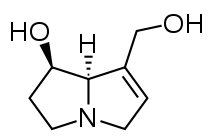
Pyrrolizidine alkaloids exist widely in many plants. It has been estimated that 3% of the worlds flowering plants, that is, more than 6000 species of plants, contain Pyrrolizidine alkaloids. So far, Pyrrolizidine alkaloids have been detected in 13 families, most of which belong to Boraginaceae (Symphytum and Heliotropium), Asteraceae (Senecio, Tephroseris, Ligularia and Eupatorium) and Fabaceae (Crotalaria)[1].
Pyrrolizidine alkaloids have high hepatotoxicity [2], genotoxicity [3], cytotoxicity [4], tumorigenicity [5][6], and neurotoxicity [7]. These alkaloids can cause severe damage such as liver hepatic sinusoidal obstruction syndrome (also known as hepatic venoocclusive disease-VOD), cirrhosis, and cancer. Additionally, they can potentially be initiators of chronic pulmonary arterial hypertension and congenital anomalies[8][9][10].
Astragalus plants contain not only the main functional components, but also other traces of harmful substances. These harmful substances have attracted more and more attention from people in the food industry, as human's continuous pursuit of healthy quality to life. Therefore, the "COMMISSION REGULATION (EU) 2020/2040 of 11 December 2020" issued by the European Union in 2020 made new regulations regard to the maximum levels of Pyrrolizidine alkaloids in some food, in which the level of Pyrrolizidine alkaloids in Herbal infusions shall not exceed 200 µg/kg, the level of Pyrrolizidine alkaloids in Food supplements containing herbal ingredients including extracts shall not exceed 400µg/kg (Fig. 1).
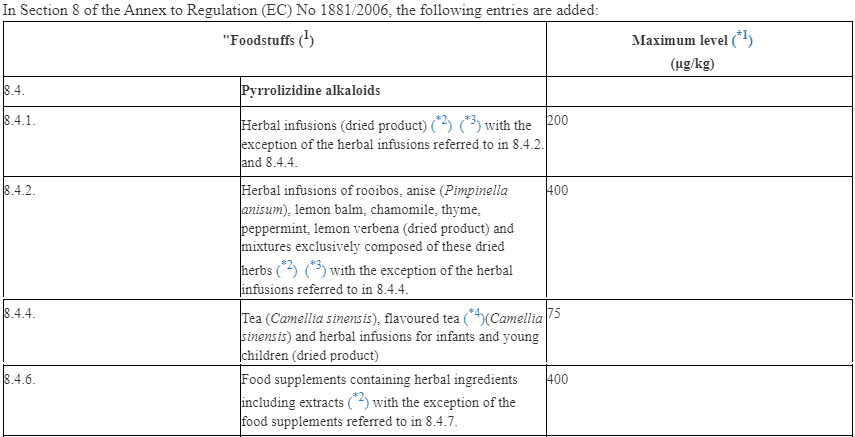
| Product type | EU maximum level (2020/2040) |
|---|---|
| Herbal infusions | ≤ 200 µg/kg |
| Food supplements containing herbal ingredients, including extracts | ≤ 400 µg/kg |
Pyrrolizidine alkaloids naturally exist in Leguminosae plant Astragalus, some of them may be mixed with solvent and enter the extract while extracting, thus polluting the plant extract. In view of the above mentioned, we developed a treatment aiming to remove the harmful components Pyrrolizidine alkaloids, which has been verified strictly by methodology and by which the level of Pyrrolizidine alkaloids is compliant with the EU standards in the premise of ensuring the natural active ingredients of Astragalus extract are free from loss.
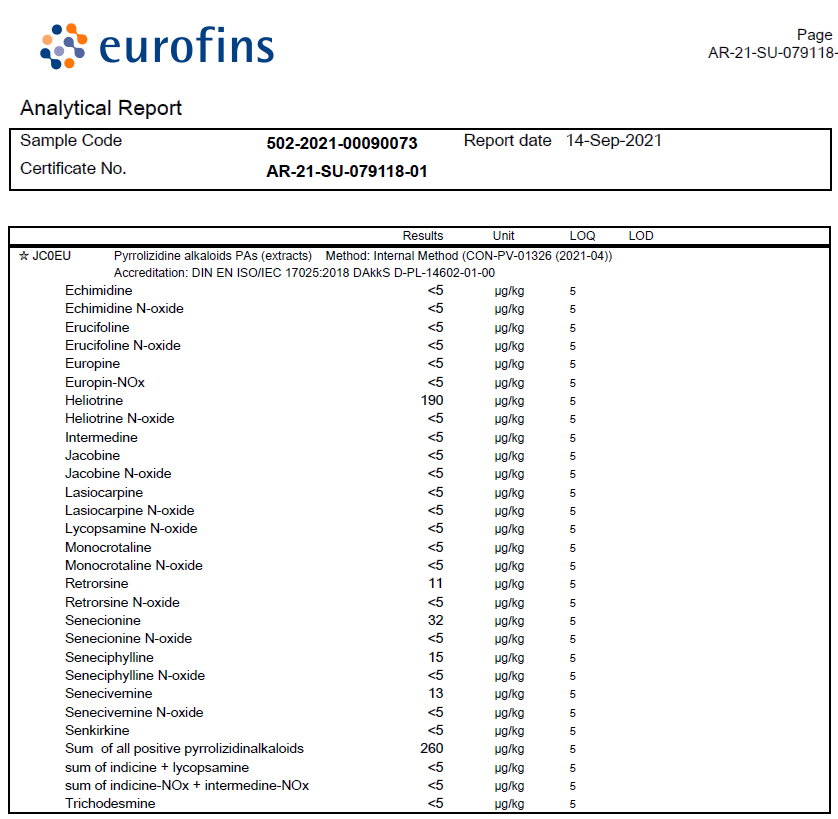
We compared the PA levels of astragalus extract sold on the market with Chengdu King-tiger's processed extract.
Market sample (without PA-removing processing): pyrrolizidine alkaloids 260 µg/kg
Chengdu King-tiger (with PA-removing processing): pyrrolizidine alkaloids not detected
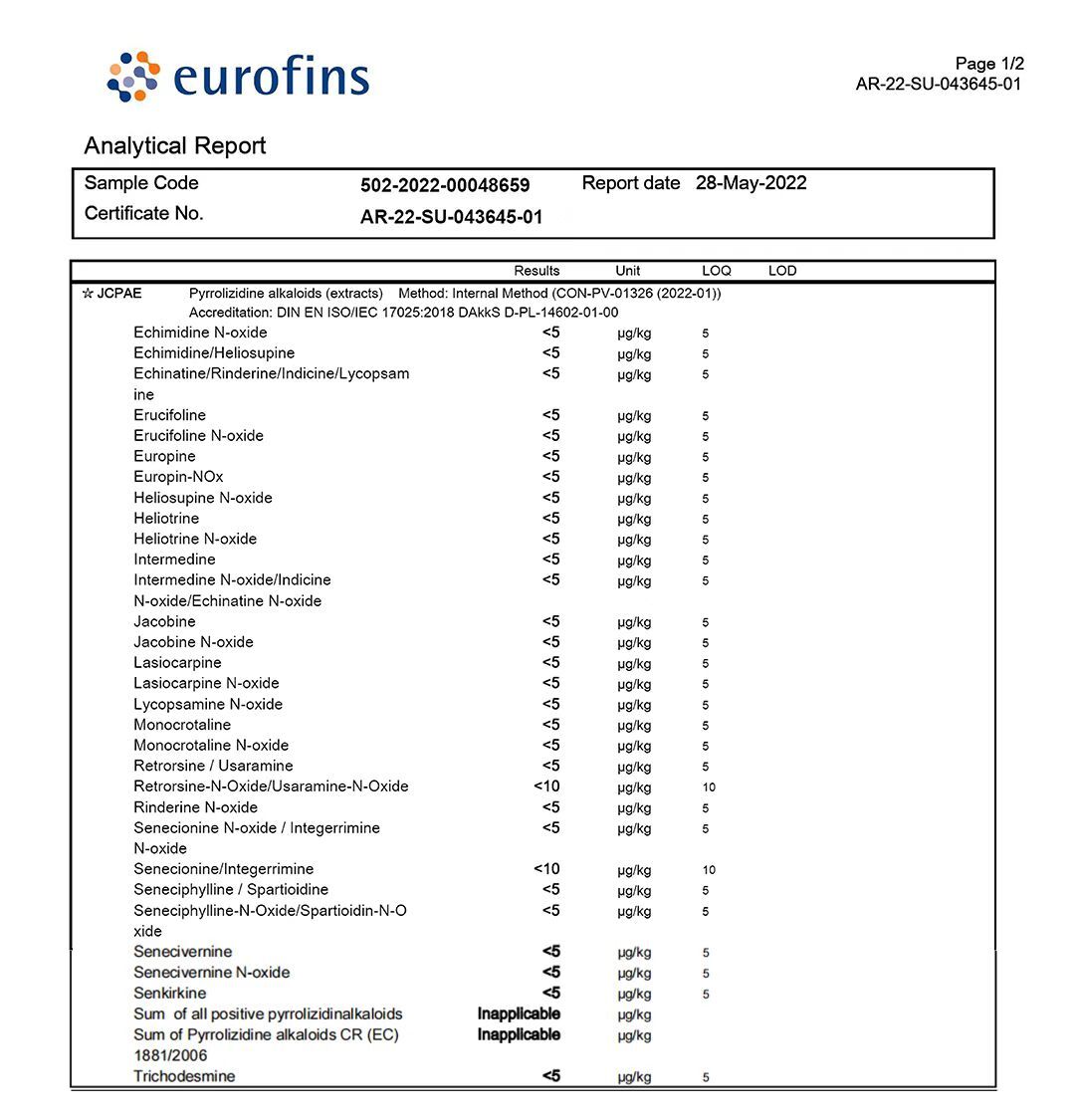
We developed a treatment that removes harmful PAs, verified rigorously by methodology. The process brings PA levels to EU-compliant values while ensuring the natural active ingredients of astragalus extract are not lost.
| Parameter | EU limit (2020/2040) | Market sample | Chengdu King-tiger (after removal) |
|---|---|---|---|
| Pyrrolizidine alkaloids (herbal infusions) | ≤ 200 µg/kg | 260 µg/kg | Not detected |
| Pyrrolizidine alkaloids (supplements w/ extracts) | ≤ 400 µg/kg | 260 µg/kg | Not detected |
Need PA-compliant astragalus extract with third-party report and CoA?
1. Smith, L. W.; Culvenor, C. C. J. Plant sources of hepatotoxic pyrrolizidine alkaloids. J. Nat. Prod. 1981, 44(2): 129-152.
2. Mattocks, A. R. Chemistry and Toxicology of Pyrrolizidine Alkaloids. Academic Press: London, 1986.
3. Gribble, G. W. The Alkaloids: Chemistry and Biology. Academic Press: San Diego, 2012.
4. Kim, H. Y.; Stermitz, F. R.; Coulombe, R. A., Jr. Carcinogenesis 1995, 16, 2691-2697.
5. Xia, Q.; Zhao, Y.; et al. Chem. Res. Toxicol. 2013, 26, 1384-1396.
6. Chou, M. W.; Yan, J.; et al. Cancer Lett. 2004, 207, 119-125.
7. Nobre, V. M. T.; Riet-Correa, F.; et al. Pesqui. Vet. Bras. 2004, 24, 132-143.
8. Fu, P. P.; Xia, Q.; Lin, G.; Chou, M. W. Int. J. Mol. Sci. 2002, 3, 948-964.
9. Wiedenfeld, H.; Edgar, J. Phytochem. Rev. 2011, 10, 137-151.
10. Edgar, J. A.; Molyneux, R. J.; Colegate, S. M. Chem. Res. Toxicol. 2015, 28, 4-20.